

Metallurgical fundamentals of carbon steel tubes
In the landscape of mechanical engineering and advanced manufacturing, the carbon steel tubes represent the undisputed standard of structural efficiency and operational reliability. Carbon steel combines iron and controlled proportions of carbon (typically between 0.05% and 0.60% in commercial compositions), together with micro-alloys of manganese, silicon, and minimal traces of phosphorus and sulfur. This chemical matrix determines the optimal balance between yield strength, tensile strength, and elongation, which are critical parameters for subjecting the part to bending, expansion, or micrometric cutting operations without the risk of cracking.
The precise selection of the carbon percentage directly conditions weldability and the response to subsequent heat treatments. Low-carbon steels (such as grade E235) offer excellent weldability and superior ductility, making them the ideal solution for continuous cold forming processes. In contrast, medium-carbon alloys (such as E355 or C45E) provide remarkably higher mechanical strength after normalizing or stress-relieving treatments, responding to severe dynamic loads in mechanical transmission components or hydraulic cylinders.
For technical purchasing departments and design engineers, understanding the specific properties of carbon steel tubes is essential to optimize costs without compromising the operational safety of mechanical assemblies. In our industrial history at Delmàs Tubes we have accumulated decades of specialization in tailoring the chemical composition and delivery condition to the geometric requirements of each customer.
Manufacturing types: precision welded versus seamless tubes
The industrial market fundamentally categorizes tubes into two major process families: the welded tube formed from rolled strip, and the seamless rolled or calibrated tube. Historically, high-pressure applications were reserved for seamless tubes, but advances in continuous high-frequency welded (HFW/ERW) forming have completely transformed selection criteria in highly demanding sectors.
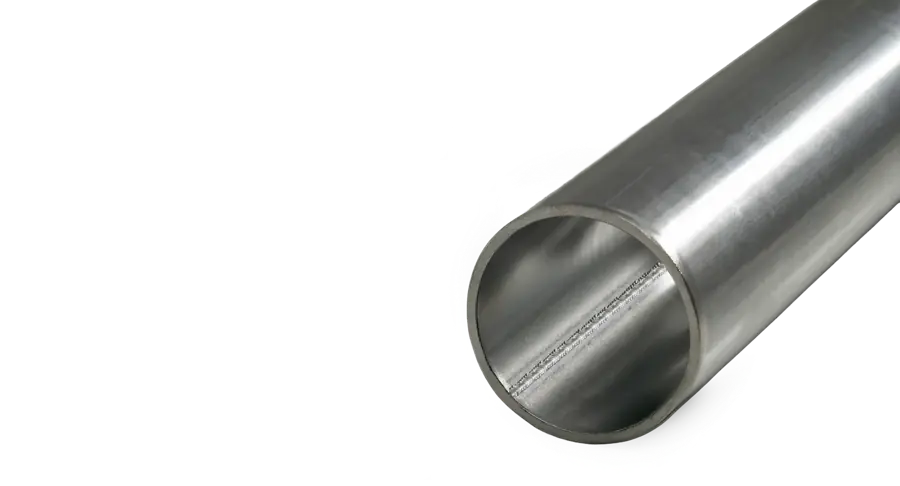
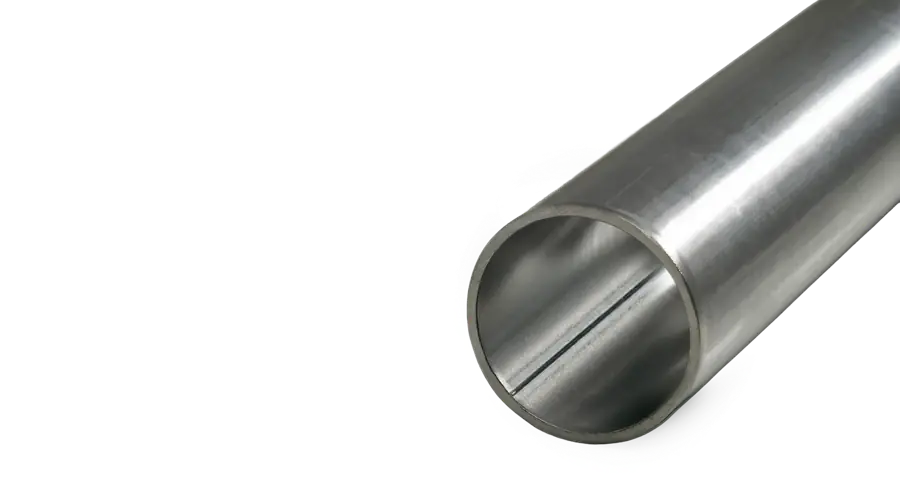
The manufacturing process of the precision welded steel tube starts from coils of hot-rolled or cold-rolled steel strip with extremely strict thickness tolerances. After tubular forming and induction welding, an exhaustive reaming of the inner and outer bead is performed, often followed by cold drawing over a cylindrical or conical mandrel. This process gives the tube an almost perfect geometric concentricity, a uniform wall concentricity throughout the circumference, and a controlled internal roughness (Ra) that no conventional seamless process can match without costly subsequent machining.
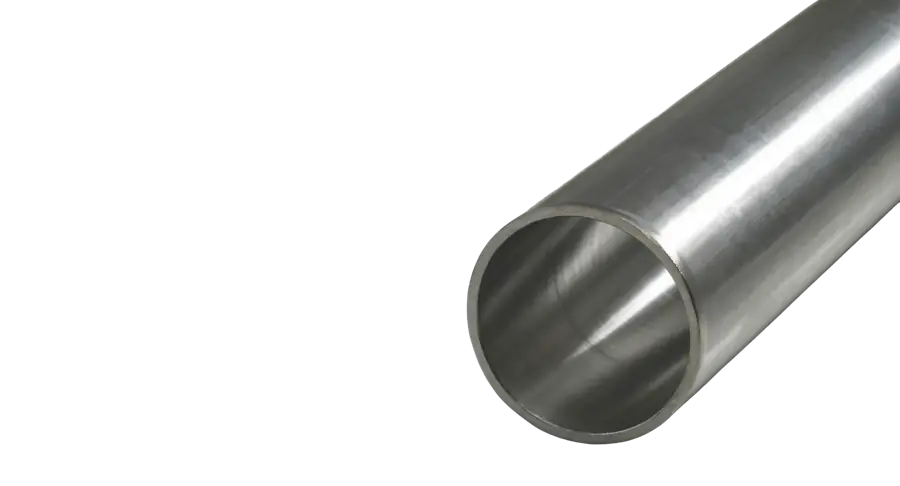
On the other hand, seamless steel tubes are obtained by hot piercing of solid billets. Although they offer intrinsic microstructural homogeneity and outstanding resistance under extreme pressure conditions and critical temperatures in petrochemical pipelines, they usually present wall eccentricity variations of the order of 10% to 12%. In dynamic applications, this variation imbalances rotating masses and forces an increase in the design wall thickness, raising the final weight and cost of the finished part.
| Technical Criterion | Calibrated Welded Steel Tube (DOM / EN 10305-2) | Cold Drawn Seamless Tube (EN 10305-1) | Standard Hot Rolled Tube |
|---|---|---|---|
| Thickness tolerance | ± 0.05 mm to ± 0.08 mm | ± 0.08 mm to ± 0.15 mm | ± 10% to ± 12.5% |
| Concentricity / Eccentricity | Excellent (< 2%) | Good (5% – 8%) | Average (> 10%) |
| Standard internal roughness (Ra) | 0.4 µm to 1.6 µm | 1.2 µm to 3.2 µm | > 6.3 µm |
| Relative cost per linear meter | Competitive / Optimal | Medium – High | Low |
| Suitability for complex bending | Very high (wall homogeneity) | High | Limited |
Applicable international standards: EN, ASTM and DIN
The procurement of carbon steel tubes requires strict alignment with current regulations to guarantee the traceability of 3.1 casting certificates according to EN 10204. In the European framework, EN 10305 directives govern the manufacturing of precision steel tubes for mechanical applications, broken down into specific sub-standards depending on the forming method:
- UNE-EN 10305-1: Cold-drawn seamless precision steel tubes, focused on systems where the total absence of a weld seam is an explicit contractual requirement.
- UNE-EN 10305-2: Cold-drawn welded tubes (DOM – Drawn Over Mandrel process), the predominant reference for cylinder bodies, shock absorbers and steering columns.
- UNE-EN 10305-3: Precision sized welded tubes without subsequent drawing, for round profiles subjected to light forming and structural assembly.
- ASTM A513 / ASTM A519: North American reference standards for carbon steel tubes of mechanical strength and tubing for intensive machining.
The correct designation of the standard must always be completed with the delivery heat treatment condition. A tube supplied in the +C condition (hard cold-drawn, without heat treatment after drawing) will present a high yield strength but a reduced bending capacity. In contrast, a +N condition (normalized in a controlled atmosphere) restructures the ferrite-pearlite network, eliminating residual welding stresses and facilitating complex plastic deformations without surface tearing.
Technical comparison of common steel grades
Dentro de los tubos de acero al carbono, la elección del grado del material determina el comportamiento frente al cizallamiento, la presión hidrostática y la fatiga cíclica. A continuación se desglosan las principales características mecánicas de los grados normalizados más demandados por la industria:
Grado E235 (antiguo St 37-2 / W.Nr. 1.0308)
Con un límite elástico mínimo de 235 MPa en estado normalizado y un contenido en carbono inferior al 0,17%, el grado E235 destaca por su alta ductilidad. Es el material de referencia para conductos neumáticos, tubos de gas para muebles y automoción, así como componentes que requieren abocardados, estampaciones o curvados de radio estrecho.
Grado E355 (antiguo St 52-3 / W.Nr. 1.0580)
El grado E355 incorpora microaleaciones de manganeso para alcanzar un límite elástico de 355 MPa (superando los 500 MPa en estado estirado +SR o +C). Esta aleación combina una tenacidad excelente al impacto con una alta resistencia a la rotura por tracción, siendo el material preferido en la fabricación de camisas para cilindros hidráulicos telescópicos y brazos articulados de maquinaria pesada.
Grados de medio carbono: C35E y C45E
Cuando la aplicación exige tratamientos térmicos superficiales como el temple por inducción para elevar la dureza superficial contra el desgaste, se recurre a grados de carbono medio. Estos tubos admiten mecanizados de precisión para casquillos, pistas de rodadura y manguitos de transmisión, requiriendo un control estricto de los parámetros de enfriamiento para evitar tensiones internas desfavorables.
Surface treatments and corrosion protection
El acero al carbono carece de la resistencia intrínseca a la oxidación que poseen los aceros inoxidables austeníticos, por lo que su durabilidad en entornos agresivos depende directamente de los tratamientos superficiales y recubrimientos protectores aplicados. Dependiendo del ambiente final de trabajo, se emplean diferentes metodologías industriales:
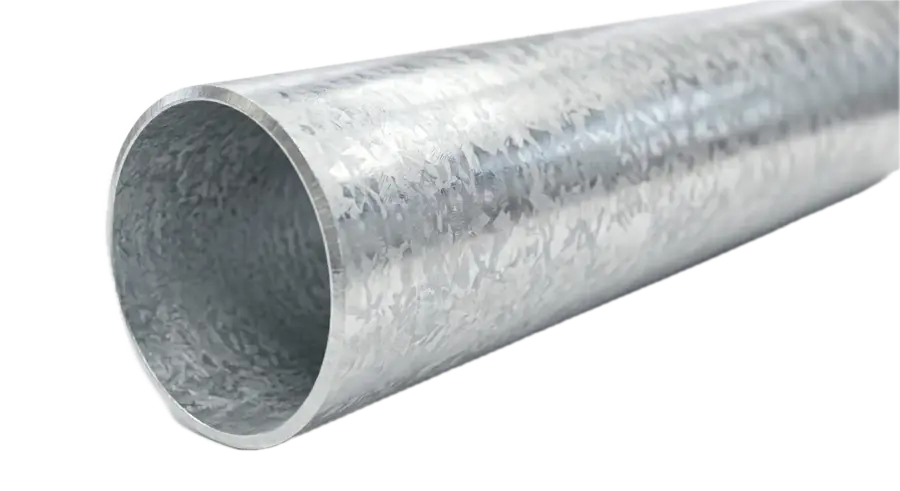
El cincado electrolítico o recubrimiento de zinc pasivado (con capas de pasivación azul, iridiscente o negra exentas de Cr VI) ofrece una barrera galvánica de sacrificio frente a la humedad y niebla salina, alcanzando resistencias superiores a 400 horas en cámara salina sin aparición de corrosión roja. Para componentes de chasis y automoción, los recubrimientos orgánicos por cataforesis (KTL) aseguran una penetración uniforme en el interior y exterior del tubo, garantizando adherencia para posteriores capas de pintura en polvo.
Asimismo, los procesos de fosfatado al manganeso o zinc actúan como base retenedora de lubricante en piezas sujetas a fricción metálica, reduciendo coeficientes de rozamiento y facilitando posteriores operaciones de conformado por deformación en frío en las instalaciones del cliente.
Sectores y aplicaciones críticas del tubo de acero al carbono
La combinación de economía de costes, exactitud dimensional y propiedades mecánicas predecibles convierte a los tubos de acero al carbono en componentes insustituibles en múltiples ramas productivas. Entre los sectores con mayor consumo se distinguen:
- Sector automoción e industria auxiliar: Utilizados en barras estabilizadoras, absorbedores de impacto, tubos para amortiguadores, barras de dirección y resortes de gas para portones traseros y capós.
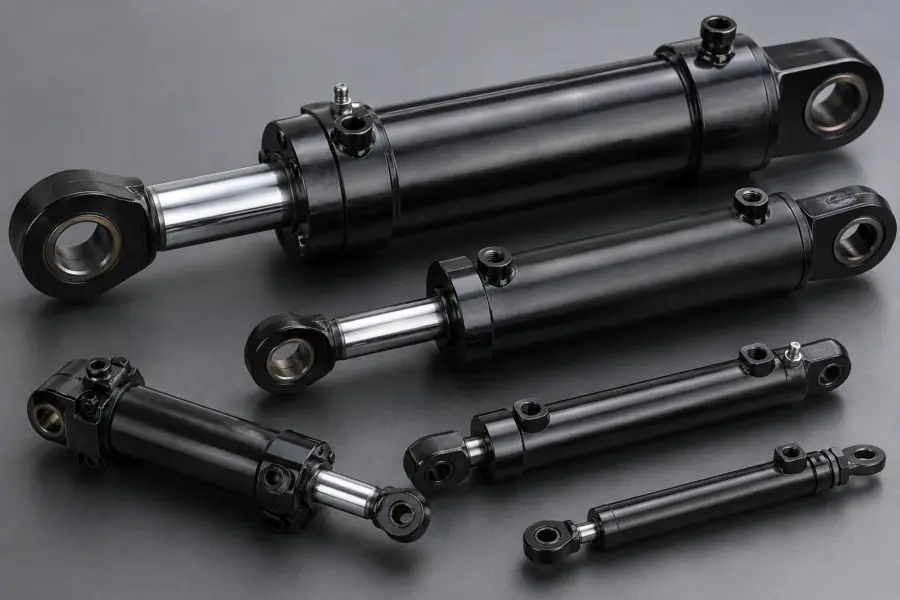
- Cilindros hidráulicos y neumáticos: Empleo de tubos soldados estirados (DOM) lapeados o bruñidos interiormente para alojar émbolos y juntas con tolerancias ISO H8 y rugosidades inferiores a Ra 0,2 µm.
- Maquinaria agrícola y de construcción: Tubos de alta resistencia para bastidores de implementos agrícolas, rodillos de transporte y componentes estructurales sometidos a torsión continuada.
- Sistemas de rotación y transmisión de potencia: La estricta rectitud y el equilibrado dinámico permiten emplear estos perfiles en tubos para rotación de ejes y rodillos transportadores industriales de alta velocidad.
Nuestra oferta técnica incluye opciones dentro de la gama Precise, desarrollada con tolerancias geométricas restringidas para minimizar mecanizados intermedios, así como soluciones especializadas dentro de la gama Premium para piezas de seguridad que exigen ensayos no destructivos al 100% por corrientes inducidas (Eddy Current).
Key criteria for B2B technical selection and purchasing
To avoid cost overruns or assembly line failures, the technical purchasing manager and design engineers must precisely define the specification sheet variables before validating a procurement order:
- Supply condition and residual ductility: Clearly specify whether the tube must be delivered in +C, +LC, +SR, +A, or +N condition, associating this parameter with the minimum bending radius (CLR) of your automatic bending machines.
- Internal weld control: For welded tubes, determine whether a flash-controlled internal weld bead (minimum allowable residual) is required or if the internal tolerance allows for the standard rolling flash.
- Straightness and concentricity: Demand maximum runout values per linear meter (typically 1.0 mm/m for standard applications, reducible to 0.5 mm/m in dynamic rotating shafts).
- Supply lengths and deburring: Evaluate whether it is more convenient to receive commercial 6-meter bars or tubes cut to exact lengths with deburred, chamfered, or ultrasonically washed ends for direct feed into robotic welding.
Discover the complete catalog and available dimensional variants by consulting our steel tube ranges, dimensioned to meet technical requirements in both large series and customized batches.
Quality assurance and non-destructive testing
The structural integrity of carbon steel tubes depends on strict quality control protocols implemented throughout the manufacturing chain. Each batch of material must undergo periodic destructive tests that verify tensile strength (Rm), yield strength (ReH), and percentage elongation (A5), complemented by technological tests such as flaring according to EN ISO 8493 and flattening according to EN ISO 8492.
Additionally, automated lines incorporate continuous non-destructive Eddy Current inspection systems to certify the tightness and continuity of the longitudinal weld, detecting microcracks, inclusions, or microscopic pores. For high-responsibility components, the control is complemented by ultrasonic testing or hydrostatic test pressures to ensure that no internal defect compromises the reliability of the final product in the field.
At Delmàs Tubes we apply a certified quality management system that audits full traceability from the steelmaking heat to final delivery at your facilities, backing each shipment with its corresponding technical documentation and dimensional testing via laser scanning.
Frequently asked questions
What is the fundamental difference between a carbon steel tube and a stainless steel tube?
The main difference lies in the chemical composition: carbon steel tube fundamentally contains iron and carbon with very low chromium contents, whereas stainless steel features at least 10.5% chromium, forming a self-healing passivating oxide layer against corrosion. Mechanically and economically, carbon steel offers a noticeably lower cost and excellent structural strength properties, but requires surface treatments or galvanizing if operated in corrosive environments.
Is it possible to bend carbon steel tubes without deforming the cross-section?
Yes, provided that a grade with adequate elongation is chosen (usually E235 or E275 in normalized +N or annealed +A condition) and bending dies with an internal mandrel are used. The use of a ball mandrel and wiper die allows for bends with radii of up to 1.5 to 2 times the outside diameter without causing ovalization or wrinkling on the intrados.
What does the heat treatment condition +SR mean in the EN 10305-2 standard?
The +SR designation indicates that the tube has undergone a stress-relieved heat treatment after the last cold-drawing pass. This heat treatment is performed at a temperature below the critical ferrite transformation point, reducing residual forming stresses while preserving the high yield strength and mechanical resistance values conferred by cold working.
When is a DOM welded tube preferable to a seamless tube?
Drawn Over Mandrel (DOM) welded tube is the preferred option when strict dimensional concentricity, rigorously constant wall thickness, and excellent internal surface quality are required to house hydraulic pistons, bushings, or shock absorbers. In addition to reducing machining cost overruns, DOM tubing usually features a lower procurement cost than equivalent seamless tubing in medium and thin diameters.
How does surface roughness (Ra) influence the mechanical applications of the tube?
A low internal roughness (Ra values between 0.2 and 0.4 µm) is critical to prevent premature wear of seals and gaskets in hydraulic and pneumatic actuators. In exterior parts, a controlled roughness finish promotes the wetting and adhesion of protective coatings such as electrolytic galvanizing or cataphoretic painting, preventing flaking during the component's service life.
If your engineering team requires support to define tolerances, alloy grades, or surface treatments adapted to your manufacturing process, please feel free to contact the Delmàs Tubes technicians to receive personalized advice and tailored technical quotations.